
|
It’s been a few weeks since my last blog post, we’re all now more used to Covid ways of working and I am in the engine room section of my Clwstwr R&D Project looking into SMART Podcasts. Here are five things I’ve learnt this month: ONE - R&D like a kid The juxtaposition of home schooling and an R&D project has led me to some interesting insights. I was observing how my kids played with their toys. The youngest played in a more experimental way - wanting to know all the different things the toy could possibly do before deciding which way to play with it. The oldest was a bit more set in their ways - a car should move, a Nerf gun should be fired, it’s unlikely to suddenly start talking to the other toys. But the youngest just spent time with each toy, pairing it with others, taking it to a different part of the room, standing it upside down, exploring its boundaries. You get the picture, and the analogy is obvious. My “toy”- a podcast - should not just be played with in its usual context - audio, smartphone, headphones, probably Apple Podcasts - in fact it is important that it’s not. This idea relates to an insight that emerged from my desk research, that young audiences are very likely to consume podcasts (thought of traditionally as audio) on YouTube, which of course is a visual platform. This highlights the importance of the simple question that one of my interviewees - Alex Lawless from Somethin’ Else - posed eloquently: “What is a podcast?” It’s just content really. Different things to different people in different contexts. Yes it can be Serial listened to on an iPhone. But it can also be a YouTuber doing a stream of consciousness into the camera. So, I made two resolutions. Firstly, in terms of exploring what is possible in future functionality, I want to stay open to every possibility of what a podcast is and what context it should exist in. Secondly, I need to play around with my own context. So, I accepted an invite to be a guest on a podcast. I took the opportunity to train someone how to make podcasts. Each context gave me new insights useful to my R&D project. Now I’m off to talk to a Nerf gun and turn some Lego minifigures upside down. 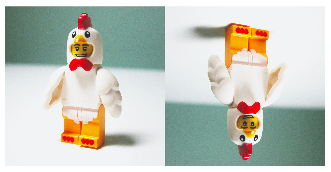 TWO - Radio, react I spoke to someone who is a bit of a radio industry legend and has worked for some huge media brands across 3 continents. She’d just spent time working with one of the big podcast distribution platforms and, as a former radio industry guy myself, the insights she gave me were quite scary. The podcast (and music) distribution platforms look at radio audiences and see future paying subscribers. They see what radio does as something they can emulate then improve on. The rise in podcasting popularity has just given them another tool to take ear-time away from radio. They are throwing vast resources of finance and time and staff at this area, we knew that already, but I came away from the conversation with a bit more understanding. The approach is different. These are tech companies coming into a media space. I’ve produced big daytime shows on BBC Radio 1 and Capital and as a Producer you’re getting the show on the air, you have limited time to really research the audience, do R&D, innovate and play. You’d love that time, but you don’t get much of it. You get very good at understanding and serving your current audience, yes, but major systemic innovation is unlikely - you adjust and adapt as you go. Conversely the big tech companies are used to spending years in development before launching a bit of functionality. Which approach will be more successful in the fast-changing media landscape of today and tomorrow? I sense a slightly dismissive tone from some radio industry figures and that could be dangerous. There’s a belief that only radio can carry on serving audiences in the way radio currently does. I’m not so sure. As we have all learnt in the last few months, never assume that the normal rules will always apply. Podcasting is on a seemingly unstoppable rise. Looking on the graph below, from RAJAR’s Spring 2020 MIDAS survey, the sharpest rising line is that of podcasting (note, live radio is not on the graph below, it's part of the main RAJAR survey). It’s a great time to be active and innovating in the podcast sector. I think radio needs to react - positively, creatively and quickly. **I wrote the above BEFORE Spotify went and splashed a reported £82m signing the Joe Rogan Experience podcast exclusively. Some analysts reckon - once ad revenue and other income is factored in - this deal makes Joe Rogan the highest paid broadcaster in the world, eclipsing Howard Stern, a radio host.** 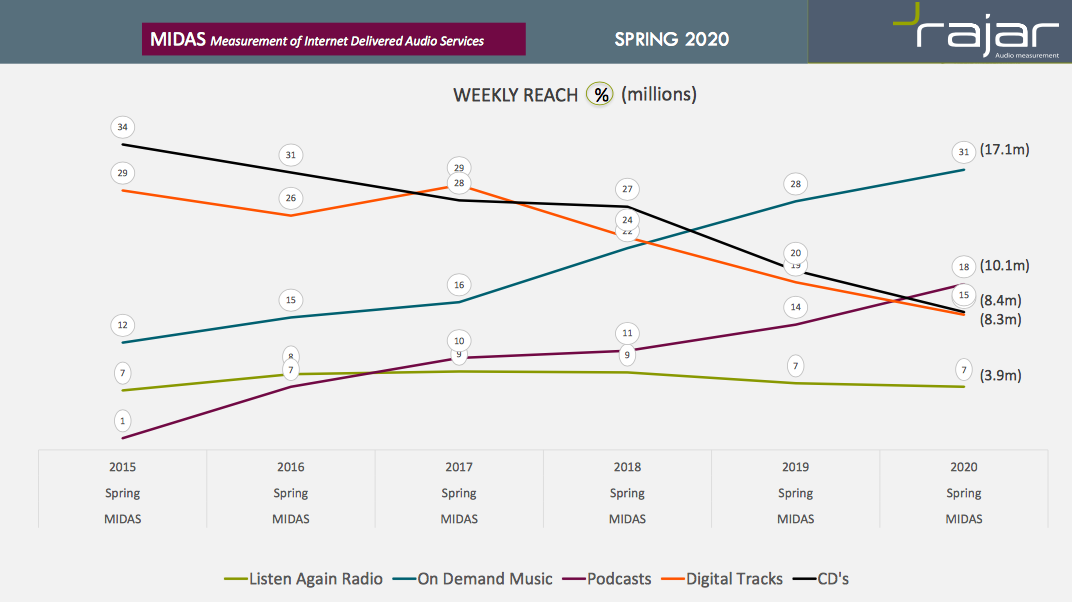 THREE - Work with your audience I’ve spent most of my career working with and for brands which try to serve young audiences. When I started out, I was young, now not so much. I knew that as I got older I needed to meet with, listen to and understand young people more and more in order to still have a chance of serving them properly. I didn’t spend enough time doing it. Fortunately, in the last few weeks, I made a small step towards putting that right. I was lucky enough to be asked to collaborate with 10 young co-creators as part of Yvonne Murphy’s brilliant ‘The Box’ project (also a Clwstwr seed-funded R&D project). I learnt so much from the experience. One big lesson, right on cue given my current R&D focus, was to 'learn, evolve, act' quickly. It felt like the teenagers and people in their early twenties I was working with would grab a concept, throw it around, take it on board and then do something with it all in fast-forward, displaying a natural creative confidence. It energised me and helped me a lot. On reflection, I think it is so important that anyone aiming to serve a particular audience spends time actually WORKING with them. That means actively doing something with them - collaborating, creating, producing - not just interviewing them, observing them, or worse, reading ‘trend reports’ about them. It’s a positive two-way street. The co-creators seemed to enjoy picking my brain for advice and experience and I came out energised, informed and inspired. Young audiences are the key growth area for podcasting, so the time I spent with these young co-creators was really valuable. I created a very quick ‘mini-podcast’ (previously known as a ‘package’ for any radio people reading) for Yvonne with some of the reflections of co-creators plus part of a brilliant podcast pilot created by one of the participants, a 17 year old who just emailed his local MP and interviewed him using a slick and effective format. Learn, evolve, act. Quickly. You can listen by clicking the Soundcloud image below. 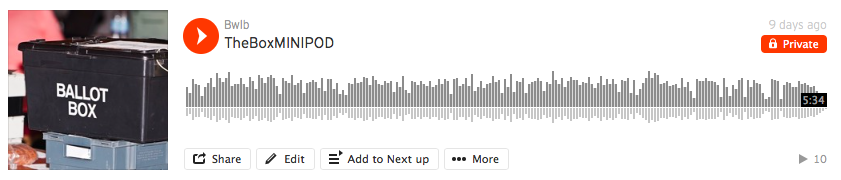 FOUR - Podcasts should listen One of the new skills I have learnt in this R&D project is to actively encourage my mind to wander in a positive way. It doesn’t mean disappearing down a Twitter black hole for an hour (OK, that might have happened a few times) but it does mean being open to creative breakthroughs in unpredictable contexts. I think in the past I have kept things in their boxes too much and haven’t been open enough for an experience in one part of my work to give me some learning in another part. In this month of the project, I experienced the joy of someone else (Steve Gill from Cardiff Met, one of my Jedi Masters, plus his colleague Gareth Loudon) running a brainstorm for me and my project. It was great to be a creative session participant for once (usually I’m the one running it) and during it there was a moment where the discussion turned to how and why people listen to podcasts. Some strange combination of that familiar ground, plus my mind wandering to previous brainstorms where I might have been explaining the classic creative concept of reversing what is the current norm (e.g. get kids, not trained presenters, to interview celebs, as done recently by Radio 1’s ‘Kid’s Ask Difficult Questions’) led me to a strange thought - what if podcasts could listen to us, listening to them? This relates to a conversation I had with Adam Mart from Wise Buddah, who has some big ideas on how to use metadata to revolutionise audio. The Producer’s art, in crafting an engaging piece of audio, should not be usurped by algorithms and automated editing. But a SMART podcast which could change itself, automatically, based on how it has observed the listener engaging with it (this builds on top of the idea of using travel time data from the user’s phone, as I am experimenting with in my accordion podcast pilot), that would be something.  FIVE - Simple, fast, done Back at the beginning of this blog (a long time ago I know - sorry, I’m getting into this now) I mentioned how I had resolved to put myself in different podcasting contexts to enable me to ‘play’ better within the podcast world. One thing I did was take the chance to be a guest on a podcast, something I had never done before. After helping me out with an interview for my project, Josh Chapman, host of the excellent ‘Star Wars Spelt Out’ pod, chatted to me about my time in the media. We discussed my Star Wars world experiences like meeting some of the actors when I was Head of Movies & Gaming Content at BBC Radio 1 & 1Xtra and also producing ‘The Secret Of Star Wars’ visual documentary (with the brilliant Phill Deacon) for BBC iPlayer back in 2015. So weird that I have arranged, produced or conducted many hundreds of interviews but have rarely been interviewed myself. There’s something about the warmth and positivity of podcasting as a medium that I imagine makes it a better experience than being interviewed for radio or TV. I certainly enjoyed it, and you can click on the episode image at the end of this section to have a listen. It was how Josh turned the podcast around which intrigued me. We even joked about it in the episode as all my BBC training kicked in with level checks, edit points and re-takes, but Josh just got it done. The more pernickety levels of production were just not needed to give the audience of this podcast what they wanted. 'Simple, fast, done' was the way to go. And it sounded great (even taking in to account having me as a guest). It’s nice to take time to craft and perfect, but sometimes the approach has to be more direct and speedy. This lesson comes at a good time as I move towards delivering my pilot version of the accordion podcast functionality (a podcast which can stretch and contract to fit the listening time available). I had already learnt, thanks to an excellent session on prototyping (provided by Clwstwr and delivered, remotely, by the impressive team at PDR) about the different levels of prototypes and their benefits and limitations. Just this week I had two breakthrough conversations about the technical work needed to deliver accordion functionality. Throw these three things together - prototype theory, technical breakthroughs and the timely lesson to deliver simply and quickly - and it's going to be an exciting final few weeks of my project. 
1 Comment
I was extremely happy to become one of the nine 3-month Research & Development Projects funded by Clwstwr. It was a key milestone for my little company, Bwlb. In my head, I would devote as much of my working hours (between the school runs) as possible to the project during March, April and May 2020. And then Coronavirus happened. And my family entered 12 week lockdown due to one of us being high-risk. And school got cancelled. And I became a 'home-schooler' stay-at-home-Dad, not a 'working between the school runs' stay-at-home-Dad. So Month 1 of my Clwstwr R&D project has been a little different from what I imagined. Still, Month 1 has happened, and here is my first of three monthly blogs about the project, where I will present 5 key things I have learned. A bit of background. My Research and Development Project is about SMART Podcasts. I believe that innovation in podcast functionality is lagging behind the current explosion in content and consumption within the sector. I want to research how new functionality could be provided and I want to develop, specifically, a pilot of an 'accordion podcast' (one that can expand or contract its length to fit the time available to the listener). So, what have I learned in Month 1? Before I start, a note of explanation. As my project cranks up I'm sure these blog posts will be focused almost exclusively on the R&D, but in Month 1, the world and all of our lives changing grabbed centre stage, so these five things are a bit of everything. 1. Remote working can actually be BETTER 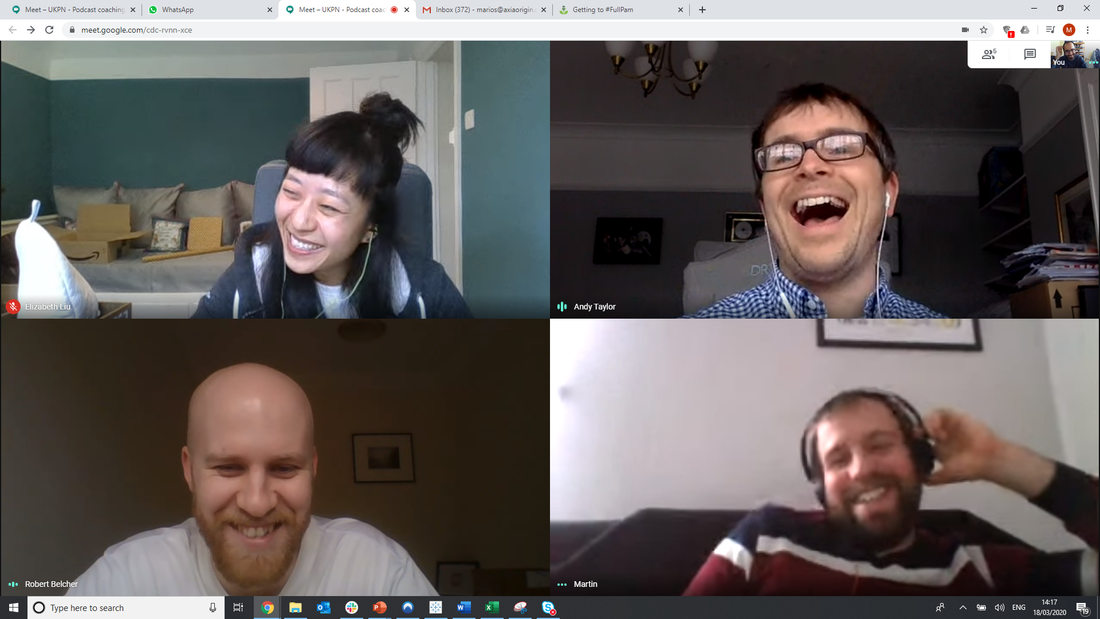 Unbelievably, this picture helped me go 'a bit' viral on LinkedIn. I think my post was no.1 trending under #podcast for a few days, which was a completely new experience for me. It was just before lockdown really kicked in and I happened to be doing some creativity and podcast consultancy with the lovely people at Axia Origin and UK Power Networks. Something about us all being in the same boat not quite knowing how to best do a remote video session mixed with the informality of being in our own homes instead of a soul-less boardroom made the whole experience brilliant. We achieved more, we had more fun, we found it easier to think in fresher ways. I had been worried that having to do my Clwstwr R&D project remotely - due to Covid-19 lockdown - was going to make it harder. After this experience my mindset flipped, I now think the project will benefit from the new ways of working I will have to create, starting with a brainstorm over Zoom, which will be happening as soon as possible. 2. Without Clwstwr, Bwlb might not be here any more My company is small and young. It doesn't fit the brief for any government Coronavirus financial support. I have a small network of clients and at the moment most of them are scrabbling around to work out how they work now, not commission new bits of work from start-up companies like mine. So to have a 3 month project just starting out, where the funding is secure, that is just incredibly lucky. Without this funding, I could see a situation where I would be looking for full-time employment now and Bwlb could be folding before it ever had the chance to flourish. So THANK YOU Clwstwr. I am so relieved that when I started Bwlb I made a promise to myself to go for any opportunity I could, talk to anyone and everyone, be interested, be ambitious and just keep trying, keep applying, keep asking. I first heard about Clwstwr when I was at the BBC Writersroom Festival in Cardiff (in another life I'm an Oscar-winning screenwriter, honest) and I saw no-one was talking to the guys at the Creative Cardiff stand, so I talked to them and they told me about Clwstwr. I didn't think I'd get the chance to go on the Ideas Lab, and if I did, I didn't think I'd get funding for a 3 month project. But here I am. It can be done. But the old "you've got to be in it to win it" cliche applies. Clwstwr currently have an open call window, so get involved here. 3. If you can, do something helpful, or a tiny bit useful 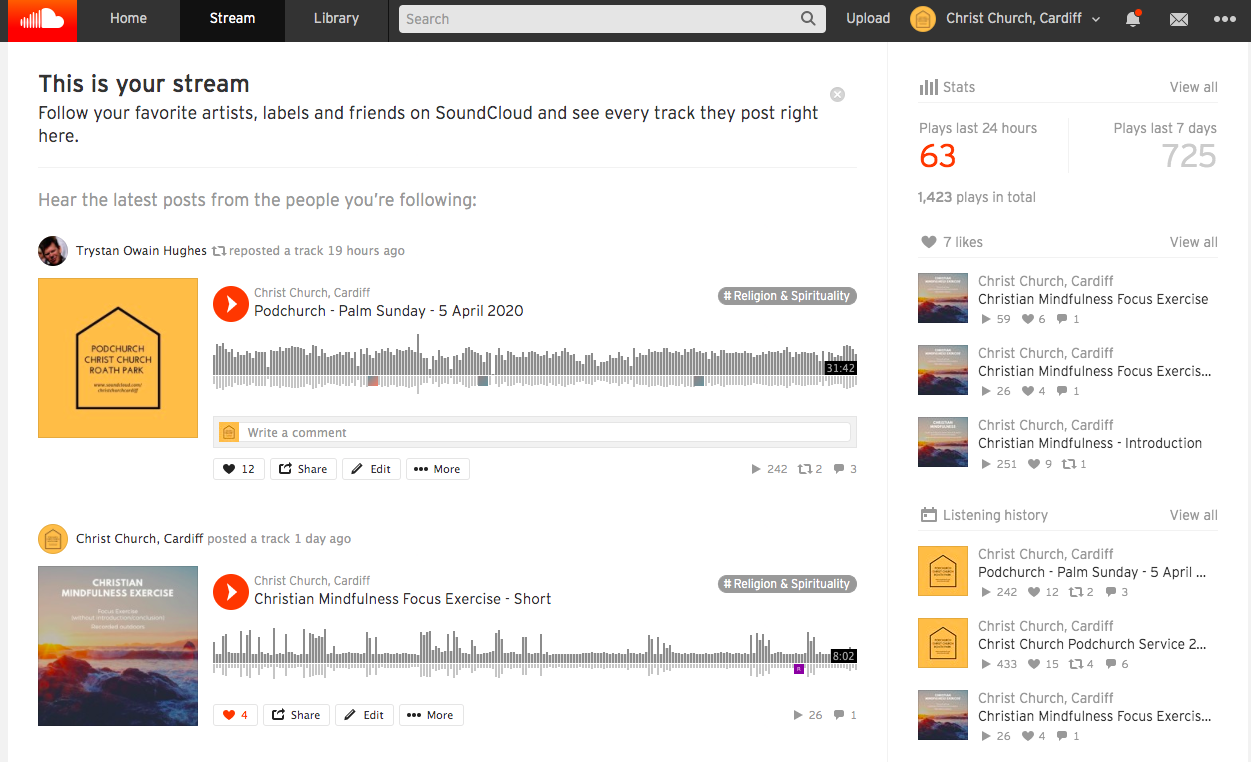 My family and I go to our local church here in Cardiff and I get on well with the vicar, Trystan. When lockdown started and the churches shut, I just had a feeling that a podcast service would work for our community, and I knew I could do it - I had the experience, the equipment and the knowledge. So I offered my services and PodChurch was born. Within a few days we had services, music and mindfulness content all going up on our Soundcloud page and the reaction, and number of listens, has blown us away. It's not volunteering to help the NHS (respect to everyone who has signed up for that) but it is something and hopefully it has helped some people in a small way. I think I've probably got more out of it than anyone else. In uncertain times, doing something positive (and new) that potentially helps other people (or is even just a tiny bit useful) is good for everyone, yourself most of all. 4. It's amazing when talented people take an interest in you and/or your project One of the best things about working with Clwstwr is the spirit of collaboration. All of my fellow cohort members are very talented and their projects are fascinating. I'm really happy to have been asked by Yvonne to collaborate with her and Lauren on her important project engaging young voters in Wales. Getting to know good people is one thing, them asking you to work with them is another. Another great thing about the Clwstwr experience is the professionals and academics which get linked to you to support your project. My three Jedi masters are Gavin (a Clwstwr Producer), Robin (a BBC executive) and Steve (a Cardiff Met Professor) and having met them all now and talked at length with them, I'm very excited about what I can learn from them. In fact, the learning has already started. Gavin helped me get over myself. I was worried about how to find the balance between wanting to talk to people about my project, and specifically the 'accordion podcast' idea, but protecting any original IP which may lie within it. I was erring too cautious and protectionist and after a chat with Gavin I resolved to be more positive and open. Also, I can already tell that Gavin's calm positivity is going to be a great help to me in the next few weeks and months. Robin made me feel so welcome when I met him at the new BBC Wales building in Cardiff, and gave me ways of thinking about my project which encouraged me significantly. The goal to make a working pilot using the best tech available, the validity of my viewpoint as an independent micro-business owner in a sector I know well, the opportunity to build on similar experimentation done by others before me - I left my meeting with Robin with these thoughts buzzing in my head. Steve opened my mind to the wider possibilities. The 'accordion podcast' is just one potential new functionality, let's brainstorm and dream and play around with what even a few of the other thousand potential ones could be (and as someone who ALWAYS runs the brainstorms, I can't wait to be sat at the 'virtual' table not standing at the head of it). The one quote that sticks in my head from my conversation with Steve is "people lie". So simple, and not as negative as it seems. The point is, you ask people why they do something (like listen to a particular podcast, or not finish it, or search out a different one) and if they don't know the answer, or can't explain it, they will make something up. The lesson is to question the answers. Always be curious, always look for other evidence, don't take everything at face value. 5. Responsiveness is one of Podcasting's superpowers 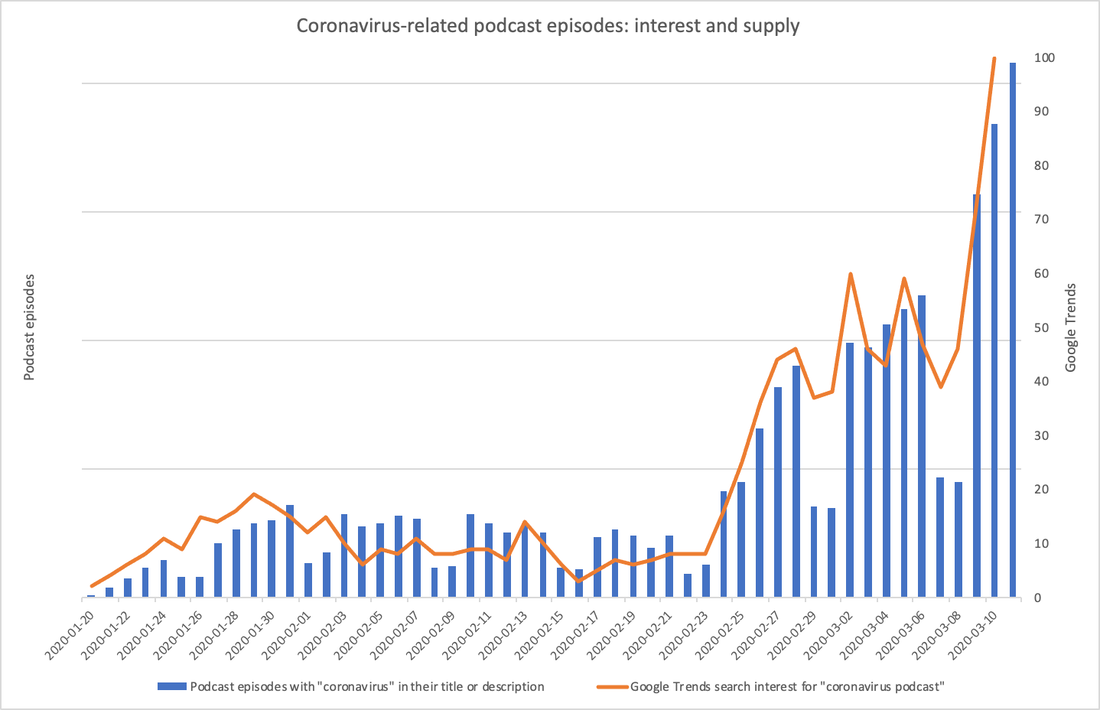 This is something which has come out of the early part of my desk research for my SMART Podcasts R&D project. I read a fascinating article by Dan Misener in which he mapped the supply and demand of Coronavirus related podcasts as the epidemic grew. The number of podcasts about Coronavirus, and the number of people listening to Coronavirus related podcasts had almost identical growth curves. Sometimes the rise in supply came first, sometimes the rise in demand came first.
Dan's point was that relevance is key to the success of a podcast, but with my accordion shaped glasses on (can that be a thing?) I saw something a little different. Responsiveness is one of Podcasting's superpowers. Tone, content, guests, format, length, even entire series or brands can adapt to respond to what the audience wants or needs at that particular time. Dan was thinking content, I'm thinking functionality. If you get stuck in traffic on the way home, wouldn't it be great if your favourite podcast could increase its responsiveness - elongate with some added 'DVD extras' style content to fill the time and finish just as you arrived home. If you've had a manic day, you've only got 15 minutes free in the evening as you throw dinner together, wouldn't it be nice if the new edition of your favourite news or sports analysis podcast would concertina down to 15 minutes so you get all the key bits and don't miss the entire episode because your chance to listen passed? Again, my mind is buzzing, which is exactly what I want it to be doing for this entire project. |
|
 RSS Feed
Photo from Phil Roeder